Personalization at Scale Is a Lie
In this article
Open any sales tool's homepage and you will find the same promise, worded slightly differently. Personalization at scale. Personalized outreach to thousands. Hyper-personalized messages, automatically. It is the phrase the whole industry agreed to repeat. It is also, in the form it is usually sold, a lie, and buyers figured that out long before the vendors did.
Here is what "personalization at scale" almost always means in practice. It means a template with blanks in it. Hi {FirstName}. I saw you work at {Company}. Loved your recent post about {Topic}. The machine fills the blanks from a spreadsheet and sends. That is not personalization. That is mail merge with better marketing. Calling it personal does not make it personal, and the person reading it can tell in about one second.
The tell is that it could go to anyone
Strip the inserted variables out of one of these messages and look at what is left. Hi. I saw you work at a company. Loved your recent post. We help teams like yours do a thing. Do you have time for a call. The body, the actual substance, could be sent to literally anyone. The only thing that changed per recipient was a name and a company pulled from a database, and everyone has now received ten thousand of these, so the pattern is obvious on sight.
That is why fake personalization often performs worse than a plain, honest cold message. A plain message at least does not pretend. The dressed-up one is trying to look like something it is not, and when the reader clocks the trick, and they always do, it reads as manipulative on top of generic. You did not earn attention by inserting their name. You spent it.
Real personalization is about them, not decorated with them
Here is the distinction that actually matters. Fake personalization is a message about you, decorated with a detail about them. Real personalization is a message about them, that only makes sense because of something specific and true in their world.
The scraped first name is decoration. "I noticed your team just posted six sales roles, which usually means the SDR side is about to become the bottleneck" is relevance. The difference is not how many variables you inserted. It is whether the reason you are reaching out belongs to them, right now, or whether you just glued their name onto a pitch you were sending regardless. One could only have been written to this person this week. The other could have been sent to a list, because it was.
The false choice the phrase hides
"Personalization at scale" was always sold as the resolution to a tradeoff. You used to have to choose, the pitch went, between personal messages that do not scale and scalable messages that are not personal. Now, magically, you can have both.
The honest version is that you were never choosing between personal and scalable. You were choosing between two kinds of scale. You can scale insertion, filling blanks in a template a thousand times, which is easy and nearly worthless. Or you can scale relevance, reaching a thousand people each at a moment that genuinely makes your thing matter to them, which is hard and actually works. The industry sold the first one and called it the second, because the first one is trivial to build and demo. The word "personalization" got quietly redefined to mean "variable insertion," and everyone nodded along.
What makes relevance real: timing
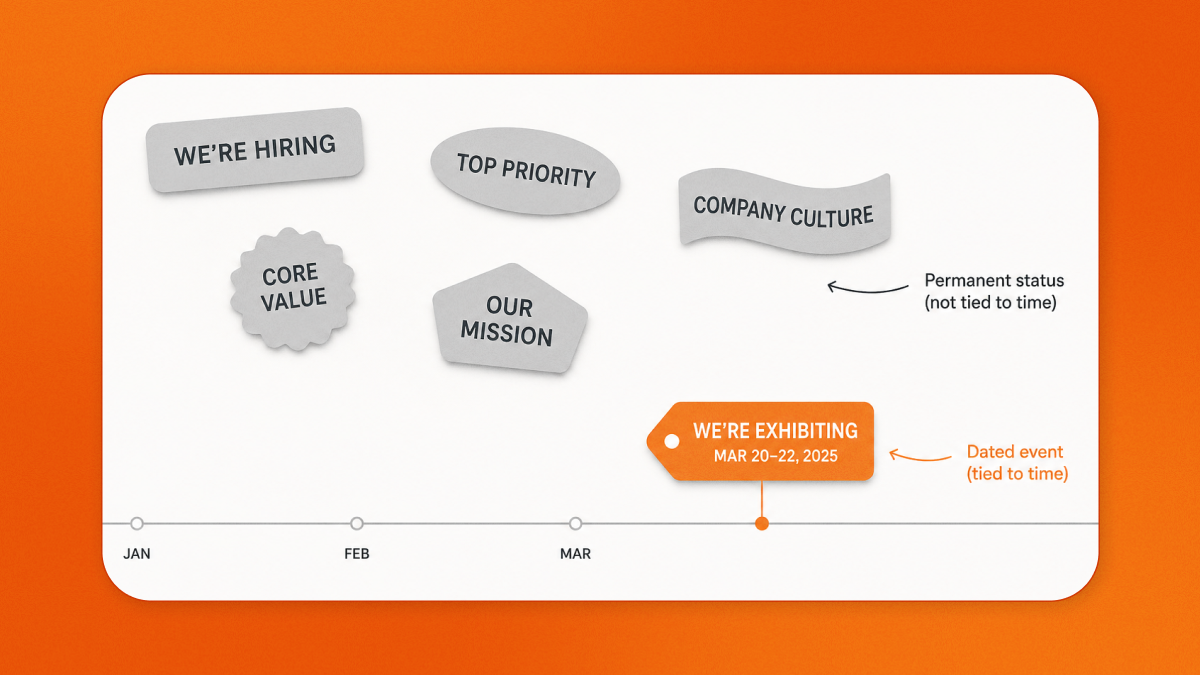
Real relevance almost always comes down to timing, because a reason to reach out is usually a thing that just happened. Someone changed jobs and now owns the problem you solve. A company raised money and suddenly has budget and pressure. A team is hiring in a way that signals the exact pain you fix is about to hit. Those are not attributes you look up. They are events, and an event is what gives your message a reason to exist today rather than being a pitch that could have landed any random Tuesday.
This is the part fake personalization can never fake. You can scrape a job title. You cannot scrape a reason to care. A message anchored to a real, recent event is relevant whether or not it contains the person's first name, and a message with the first name but no real reason is generic no matter how many blanks you filled.
AI made both versions possible
AI is why this conversation matters more now than it did five years ago, because it cut both ways at once. On one side, AI made fake personalization infinite. Anyone can now generate endless messages that scrape a detail and wrap a pitch around it, which is a big part of why inboxes are drowning and why buyers have gotten so allergic to the whole genre. Most of what gets called AI personalization today is just the merge field trick at a larger scale.
On the other side, AI is the first thing that makes real relevance possible at scale. Reading a genuine signal, understanding what it implies, and writing a message actually built around that moment used to be slow manual work you could only do for a few prospects. Now it can be done across many. So the promise of "personalization at scale" is finally achievable, just not the way it is usually sold. Not by inserting more variables faster. By scaling actual relevance, tied to actual timing.
How to tell the difference
There is a simple test for any message, yours or one you receive. Swap the name and the company for someone else's. If it still makes sense, it was never personalized, it was mail merge. If it falls apart, because it only made sense sent to that specific person because of something specific happening in their world, then it is genuinely relevant.
Hold your own outreach to that test. If your "personalized" messages survive the swap, you are doing the thing the whole market is doing, and getting the results the whole market is getting, which is worse every quarter. If they only work for the one person they were written for, you are doing the thing that still cuts through.
Personalization at scale, as it is usually sold, is a lie. But there is a true version underneath it, and it is worth wanting. It is relevance at scale, reaching the right people at the moment they actually have a reason to care, with a message that is true about their world and not just decorated with their name. That is what Sendio is built to do. It watches for the buying moments across your market and writes each message around the specific signal, so what goes out is relevant because of timing, not personalized because of a merge field. Stop filling blanks. Start reaching people when they have a reason to hear from you.