Sendio on How Buyers Actually Buy in 2026

In this article
By the time a buyer answers you, the decision already has a history you were not part of.
That is the uncomfortable shape of B2B now. Somebody noticed a problem, complained about it internally, read a few things, asked two peers, looked at a competitor's site, and put a rough number in a spreadsheet. Then your message arrives and you assume you are starting the conversation. You are joining one.
Selling well in this environment is mostly about arriving at the right point in a process you cannot see.
The evaluation runs without you
Buyers research privately. They read, they ask their network, they watch how vendors talk in public, and they form opinions long before a form gets filled or a DM gets answered. Sales is no longer the source of information, which means the old job of explaining the category is mostly done by the time anyone talks to you.
What survives is a different job: being present and relevant at the moment the problem becomes urgent, and being easy to check when they go look you up.
More people are in the room than you speak to
The person who replies to you is rarely the whole decision. There is usually someone who feels the pain, someone who controls the money, someone whose approval can quietly kill it, and someone who will have to use the thing.
Your reply came from one of them. If the deal lives entirely in that one thread, it dies the moment that person gets busy, changes jobs, or hits an internal objection they cannot answer alone.
Which is why the interesting question after a good first call is not "when can we talk again" but "who else feels this problem", asked in a way that arms your contact instead of going around them.
Problems are permanent, priorities are not
Here is the part that actually changes how outbound works.
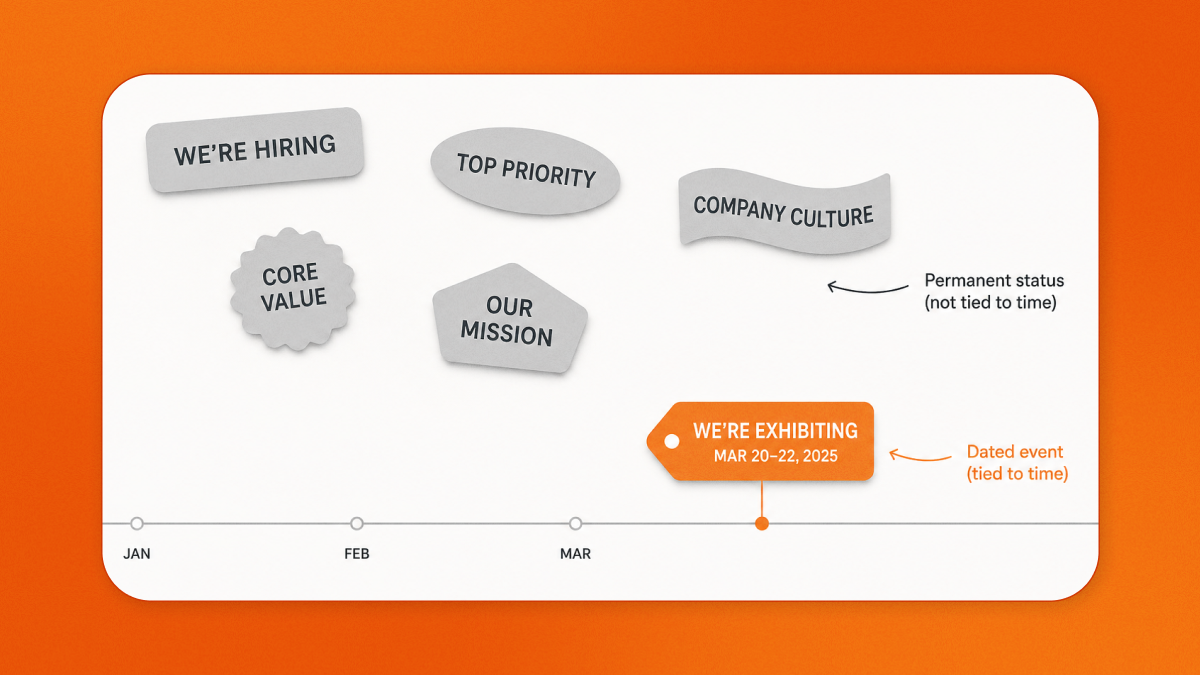
Most of your target market has the problem you solve all year long. They live with it. They have a workaround. Nothing about that changes because you sent a clever message.
What changes is priority, and priority moves when something happens. A new leader arrives with a mandate and a review. A round closes and the plan says grow. Eight roles open and the workload is now visible on an org chart. A tool gets swapped and everything connected to it comes up for discussion.
Those moments are when a permanent problem becomes this quarter's project. Writing before one of them is education. Writing after one is a conversation. That gap is the whole reason signals beat lists.
Buyers are warier, not colder
Sending got cheap for everyone at the same time, so inboxes filled with competent, personalized, completely generic outreach. Buyers adapted by pattern matching. They recognize the shape of an automated sequence in the first line and delete without reading the second.
None of that means they stopped buying. They buy constantly. They just filter harder, and the filter is looking for one thing: evidence that this message was written about them, now, for a reason.
They check you before they answer
Someone who half likes your message will look at your profile, skim your recent posts, and glance at your site before typing anything. That happens in about thirty seconds and it decides whether you get a reply.
So your profile is part of the sale, not a formality. It should say what you do for people like them, in their words, with recent activity that shows you think about their problem. A strong message pointing at an empty profile reads as a stranger with a script.
What this asks of outbound
Four rules follow from all of it.
Arrive on the event, not on the calendar. A cadence that fires on day three is tuning the wrong variable. A trigger that fires when priority shifts is the only timing that tracks how buying works.
Write to the person who owns the problem, then widen. Start with the owner, and once there is interest, help them bring in the money and the skeptic rather than hoping one thread carries the whole decision.
Make the first ask small. Fifteen minutes to compare notes is a decision someone can make alone. A demo, a trial and a security review is a decision that needs three people who have not heard of you.
Be legible when they check. Profile, posts, site. All three get looked at, all three take an afternoon to fix, and most teams fix the message instead.
Where sellers actually lose in 2026
Not in the pitch. Two other places.
The silence between a positive reply and a scheduled meeting, where enthusiasm cools while somebody waits for a calendar link. And the single thread, where a deal that was real dies quietly because the only person who cared moved on.
Both are unforced. Both are fixed by paying attention to the conversations you already have rather than by sending more.
How Sendio works with this
Sendio watches for the moments when a permanent problem becomes a priority: job changes, funding, hiring activity, tech stack shifts, competitor engagement, and posts that match your ICP keywords. Every account is scored on how recent the signal is, how many signals overlap, and how well the company matches your ICP, so what you open in the morning is a ranked queue of accounts that just moved rather than a list of companies that merely qualify.
Messages are written around the specific signal at the moment of send, which is what makes them survive the buyer's filter. Replies land in one inbox ranked by intent instead of arrival, so the account that just raised outranks the polite maybe, and the gap between reply and meeting stays short.
Professional is $79 a month, fourteen day free trial, no credit card.
The short version
Buyers do their homework without you, decide in groups, and act when priority shifts rather than when your sequence reaches step three. Outbound that ignores all three is a volume business, and volume is the one thing that stopped being scarce.
Show up on the moment, write like a person who noticed, and make it easy for the next three people to say yes.