Fit vs Intent: Why Your Perfect List Stays Quiet

In this article
You can build a list where every single account is a textbook match and still get a quarter of silence.
That outcome confuses people, so they blame the copy. They rewrite the opener, shorten the message, test a new call to action, and the numbers move by almost nothing. The problem was never the writing. The list answered one question and the reply rate depends on a different one.
Fit and intent are not two versions of the same thing. Fit is a property of a company. Intent is an event that happened to it.
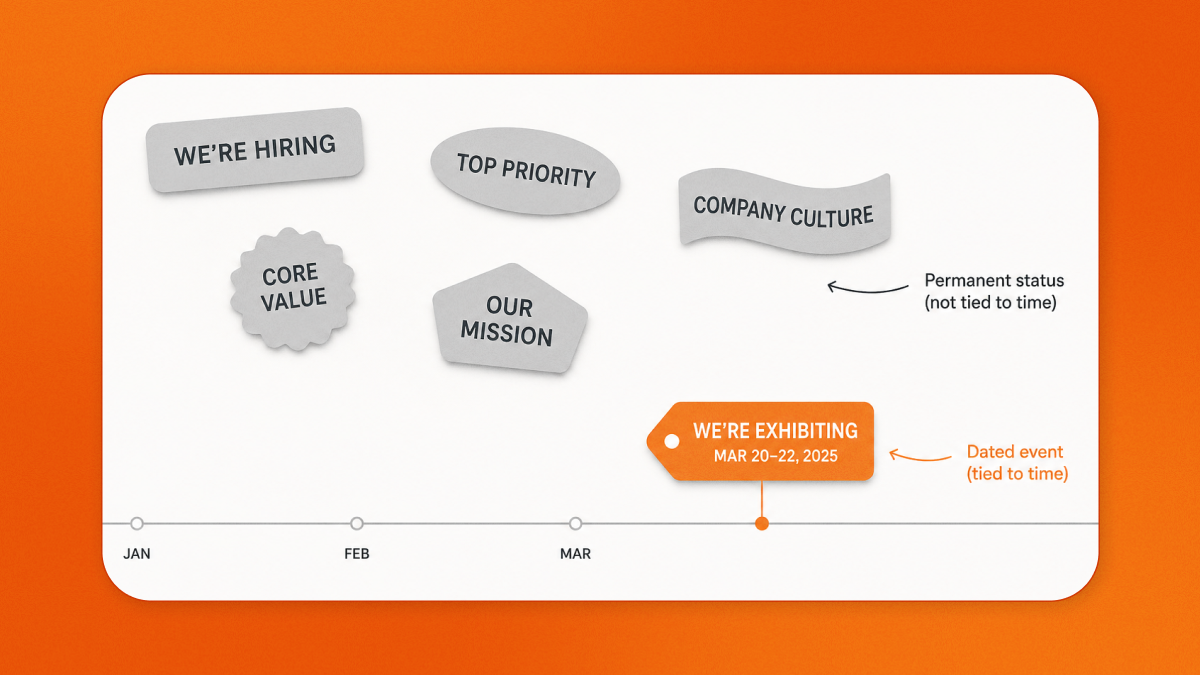
Fit answers a question about forever
Right segment, right size, right role, right region, a budget that can absorb what you charge. Fit tells you that this company could buy from you, in principle, at some point.
It is stable by design. A company that fits today fitted six months ago and will probably fit six months from now, which is exactly why fit cannot tell you what to do on a Tuesday. Nothing in a fit filter has a timestamp.
Intent answers a question about now
A new leader in a senior seat. A round closed last week. Eight roles opened in ten days. A tool swapped out of the stack. Someone engaging with your competitor's content this morning.
Every one of those is dated, and every one of them marks a moment when a budget, a mandate, or an urgency moved. That movement is what makes a stranger willing to answer a stranger.
The four boxes
| Intent now | No intent | |
|---|---|---|
| Fits | Write today. This is the entire job | Watch. The next signal brings it back |
| Does not fit | Drop it. Loud and irrelevant | Nothing to do here |
The top left box is your week. The top right is your pipeline for later, and the discipline there is to leave it alone instead of inventing a nurture campaign for a company that has no reason to talk yet.
The bottom left is the one that costs people money, because it is seductive. A non buyer engaging heavily looks exactly like demand.
Why teams over build the fit half
Fit is purchasable. You can filter for it, buy a list against it, and show it in a slide. It behaves like work.
Intent has to be observed, continuously, from behavior that changes daily. There is no file to download, which is why most teams end up with a large, well filtered list and no idea which twenty accounts on it are in motion this week.
So the budget goes to the half that is easy to measure, and the half that decides your reply rate gets handled by whoever remembers to check LinkedIn.
Intent without fit is the expensive mistake
This is the bottom left box, and it wears a convincing disguise.
A consultant in your category comments on everything you publish. A job seeker in your industry engages with every post about the problem you solve. A competitor reads all of it. Their behavior generates exactly the signals your system is watching for, and the score goes up because volume of engagement went up.
If you rank purely by intent, these people rise to the top of your queue and stay there, because they are more active than your actual buyers. You spend your best hour on people who cannot purchase, and your reply rate quietly tells you nothing is working.
A strong signal on an account that fails the fit test should be filtered out, not promoted.
Fit is the gate, intent is the queue
That sentence is the whole operating rule.
Fit runs first and decides who qualifies to ever hear from you. Intent runs second and decides who hears from you this week. Reversing the order gives you a busy calendar full of the wrong conversations. Running fit alone gives you a beautiful spreadsheet and a quiet inbox.
One more thing people forget: fit is not permanent either. A company that was too small eighteen months ago may have crossed the line while you were not looking, and it is probably still sitting in the excluded pile. Re-check the boundaries of your filter every quarter, especially the size band.
What changes when you run it this way
Your list stops being a file and becomes a queue. There is no fixed number of accounts to work through, because the set of companies in motion changes every morning and refills on its own.
Your volume stops being a goal and becomes a consequence. Some weeks your market moves and there is plenty to do. Some weeks it does not, and forcing sends on the quiet weeks is how reply rates fall and accounts get restricted.
And your reporting gets readable. Meetings per signal tells you something you can act on. Meetings per thousand contacts does not.
How Sendio holds both halves
Sendio scores every account on three inputs before you see it: how recent the signal is, how many signals overlap on the same account, and how well the account matches your ICP. Recency and overlap are the intent half. The ICP match is the fit half, and it works as a gate, so a loud trigger on a company that could never buy gets filtered rather than ranked.
What you open in the morning is a ranked queue with the hottest qualified accounts on top, each row showing the signals behind its score. Not a list you bought, and not a feed you triage.
Professional is $79 a month, fourteen day free trial, no credit card.
Check your own list this week
Take your current target list and mark how many accounts had a dated event in the last thirty days. That number, not the list size, is your real addressable pipeline right now.
If the gap between the two numbers is uncomfortable, that is the finding.