Stop Answering Replies in Order: How to Triage a LinkedIn Inbox by Intent
In this article
There is a problem most teams never plan for, because it only shows up once outbound starts working. The replies come in. Then more come in. And somewhere in that pile is a person who wants to talk today, sitting three threads below someone typing "please remove me from your list." If you work the inbox top to bottom, the hot lead waits while you handle the noise. That is how good pipeline quietly leaks out of a process that looks busy and healthy.
This is a guide to fixing that. The core idea is simple. Stop treating your inbox as a list to clear in order, and start treating it as a queue to work by intent. Answer based on how ready someone is to buy, not on when their message happened to land. Here is how to read intent, how to sort by it, and what each kind of reply actually needs from you.
Why answering in order is the wrong default
Most inboxes are built around time. Newest on top, or oldest first, and you work your way through. That makes sense for a to-do list. It makes no sense for sales, because the order messages arrive in has nothing to do with how valuable they are.
A chronological inbox treats every reply as equal. The person asking "what does pricing look like for a team of twenty" gets the same place in line as the person saying "wrong department, try someone else." You end up spending your freshest energy and your fastest response on whoever shouted most recently, instead of on whoever is closest to a yes. The cost is invisible, which is what makes it dangerous. You never see the deal you lost because you got to it a day late. You just see a slightly lower close rate and assume that is normal.
Speed matters, but only where it matters
You have probably heard that responding fast to a lead is worth a lot, and it is true. The value of a reply decays quickly. Someone who is curious right now may not be curious tomorrow, because they got busy, or a competitor answered first, or the impulse passed. Getting back to a hot lead in minutes instead of days can be the whole difference between a booked meeting and a dead thread.
The trap is reading that as "respond to everything instantly." You cannot, and you should not try. Sprinting to reply to a low-intent "no thanks" with the same urgency you give a buying question just burns you out and trains you to treat the inbox as one undifferentiated fire. Speed is a resource. Spend it where it changes the outcome, which means spending it on the people whose intent is high and whose window is open right now.
The three buckets
The fastest way to bring order to the chaos is to sort every reply into one of three buckets the moment you read it. You are not writing a response yet. You are just deciding how ready this person is.
High intent. They asked a real question. Pricing, capabilities, timing, "how would this work for us," "can you send more detail," "do you have time this week." These people are leaning in. They are the closest thing to a yes you will get, and they are the ones whose value decays fastest if you make them wait. This bucket gets answered first, fast, and by a human paying real attention.
Medium intent. Curious but not committed. "Interesting, but not right now." "We are looking at this next quarter." An objection that is really a question in disguise. These are warm, just not urgent. They do not need a sprint, but they absolutely cannot be dropped, because a chunk of them turn into customers later if you keep the thread alive and come back at the right moment.
Low or negative intent. A flat no, a "wrong person," a request to be removed. These are not failures, they are clarity. They tell you where not to spend another minute. They get a quick, polite, human acknowledgment and then they come off your active list. Done well, even a no leaves the door open and your reputation intact.
How to read intent from the words
You do not need a complicated system to bucket a reply. The language tells you almost everything.
High intent sounds like forward motion. Questions about how it works, about price, about fit. Specifics. Anything that assumes a next step. When someone asks you to do something ("send me the deck," "what would this cost"), they have already pictured working with you, even a little.
Medium intent sounds like interest with a brake on it. The word "but" shows up a lot. "Looks useful, but we just started with someone else." "Not right now." "Maybe after we close this quarter." The interest is real and the timing is the only thing in the way, which means timing is the thing you solve later.
Low intent is usually short and final. "Not interested." "Please stop." "Not my area." There is no question, no opening, no future tense. Respect it, because arguing with a clear no is how you turn a neutral non-customer into someone who warns other people about you.
Work the buckets in order
Once everything is sorted, the priority writes itself. High intent first, every time, as fast as you reasonably can. Inside that bucket, then you can go by recency, because now you are ranking genuinely hot leads against each other. Medium intent next, with the goal of keeping the thread warm and noting exactly what the blocker was, so future you knows what would reopen it. Low intent last, handled quickly and gracefully, then cleared.
The shift is small to describe and large in effect. You are no longer letting the loudest or latest message set your priorities. You are letting readiness to buy set them. The same hour of inbox work produces more meetings, because the hour goes to the people a meeting is actually possible with.
Do not put the hot ones on autopilot
Automation is great at the top of the funnel, finding the right people and starting the conversation at the right time. The moment someone replies with real intent, the job changes. That high-intent reply is exactly where a thoughtful, human, specific response earns the meeting, and exactly where a canned auto-reply loses it. The person leaned in. Meeting them with an obvious template after they did is the fastest way to cool a hot lead back down.
So the rule of thumb is this. Let the system handle reach and timing and the first touch. When intent spikes, a human takes the wheel. The handoff between the two is where a lot of pipeline is won or lost, and getting it clean matters more than almost anything else in the inbox.
Why a unified, intent-ranked inbox helps
All of this is harder than it sounds when your replies are scattered. One conversation is in LinkedIn, another in a connection request thread, another somewhere else, and none of them are sorted by anything but time. You end up doing the triage in your head, on every visit, and the hot lead still slips because you simply did not see it in the pile.
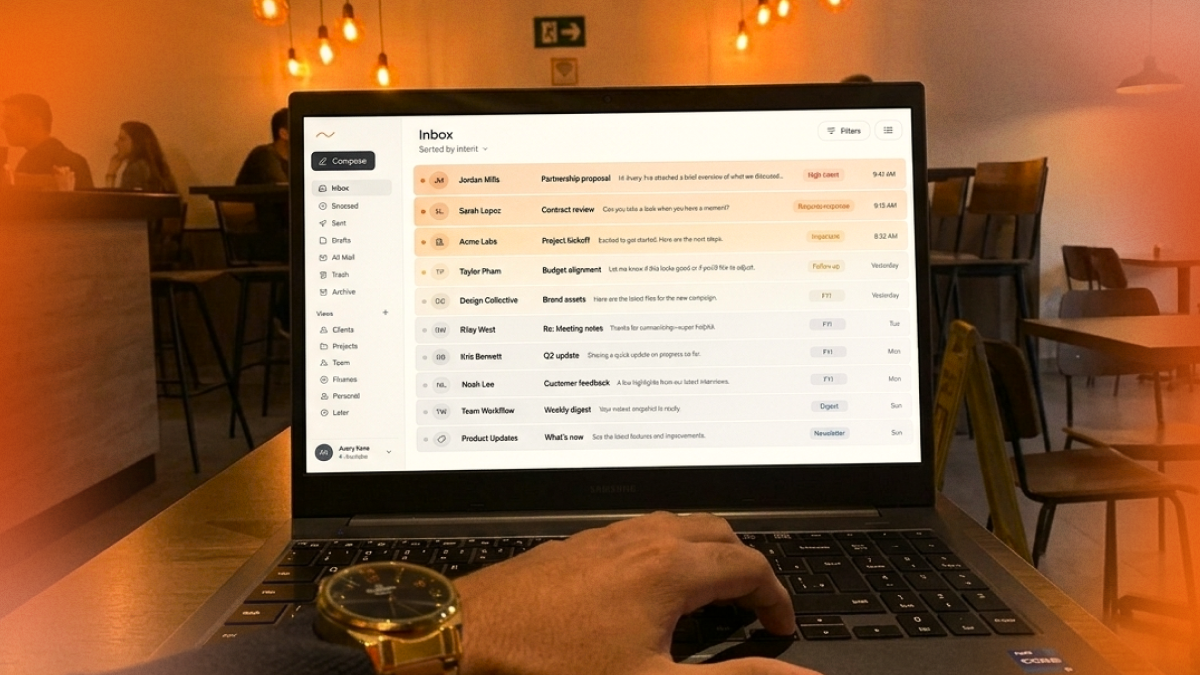
This is the practical case for keeping your replies in one place, ranked by intent instead of arrival. When the inbox itself surfaces the high-intent conversations at the top, the triage stops being a discipline you have to remember and becomes the default you fall into. You open it and the people closest to buying are right there, already at the front of the line.
That is one of the things Sendio is built to do. Every reply across your outreach lands in a single inbox, ranked by how much intent it shows, so the conversation most likely to become a meeting is the first one you see. The work of sorting noise from signal is already done by the time you sit down, which means your fast response goes where it pays.
The inbox is not a chore to clear. It is the part of outbound where intent finally becomes revenue, and the order you work it in decides how much of that intent you actually capture. Sort by readiness, move fast where it counts, and stop letting the clock decide who you talk to first.