Interest Is Not Intent: The Signal Most Outbound Misreads
In this article
I have watched a lot of outbound die from the same quiet mistake, and it is almost never the one people think it is. They blame the copy, the list, the channel. The real problem usually sits one layer up. The team saw someone pay attention to them and decided that attention meant the person was ready to buy. It did not. They confused interest with intent, and they built an entire motion on top of that confusion.
The distinction sounds like hairsplitting until you see what it costs. Interest is someone reacting to you. Intent is someone moving toward solving a problem. They feel similar from the outside, a name lighting up, a profile view, a like on a post, but they come from completely different places and they ask for completely different responses. Treat every flicker of interest as intent and you will spend your best energy chasing people who were never going anywhere, while the buyers who were actually in motion slip past unnoticed. So let me separate the two properly, because once you can see the line between them, your whole read on a prospect changes.
What interest actually is
Interest is attention without motion. Someone glances at your profile. They like a post. They open an email. They follow your company page. All real, all worth knowing about, and none of it means the person has a problem they are trying to solve right now.
Think about your own behavior. You like things on LinkedIn constantly. You read posts from companies you will never buy from. You click headlines out of curiosity, out of boredom, out of a vague sense that the topic is adjacent to your world. None of that means you are in the market. Interest is cheap to give and it costs the person nothing. That is exactly why it is a weak signal. The bar to express it is so low that almost anyone clears it, which makes it a poor predictor of who will actually talk to you about buying.
This is not to say interest is worthless. It tells you someone is at least aware, at least warm to the topic. But it is the beginning of a relationship, not evidence of a purchase decision. The mistake is not noticing interest. The mistake is acting on it as if it were something it is not.
What intent actually is
Intent is motion toward a decision. It shows up not as attention paid to you, but as a change in the person's own situation that creates a problem worth solving. They just took a new role and inherited a mess. Their company raised and now has to scale a function fast. They lost a key person and have a gap to fill. They added a tool that needs something to sit next to it. They started hiring for a team that does not work without the thing you sell.
Notice what all of those have in common. They have nothing to do with you. The person did not have to like your post or open your email. The signal comes from their world changing in a way that puts them in an active window, where the problem is now urgent and the status quo just broke. That is intent. It is rarer than interest, it is harder to see, and it is worth an order of magnitude more, because the person on the other end is genuinely looking for an answer rather than idly scrolling past one.
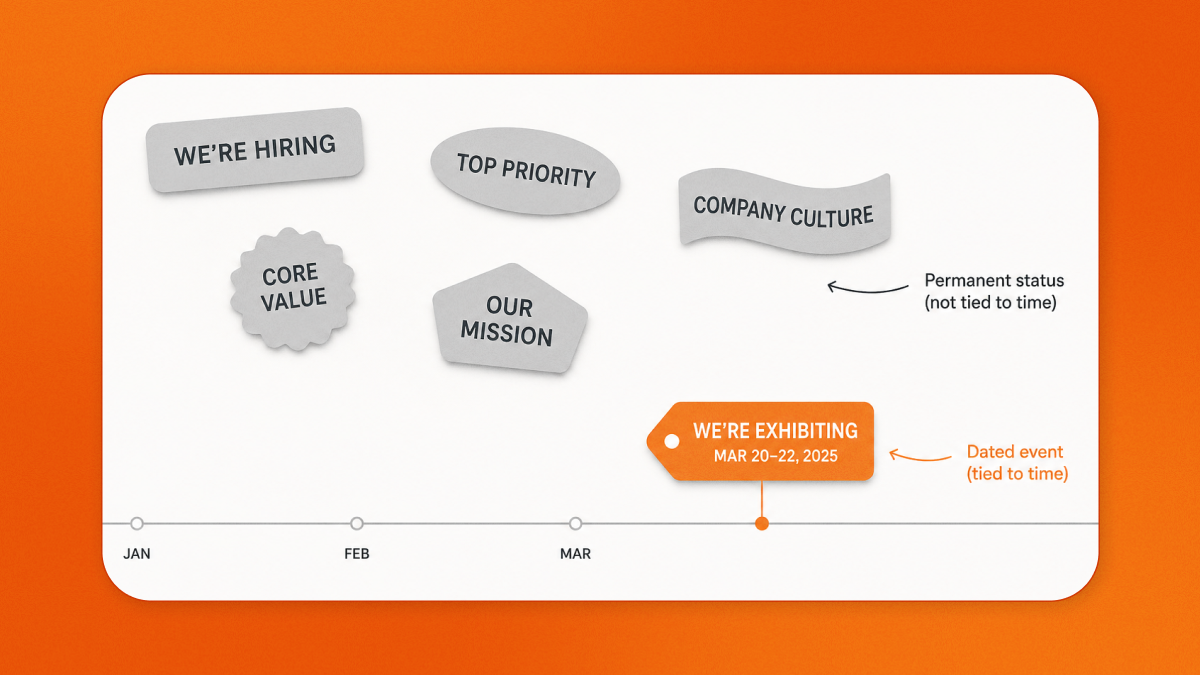
Intent has a clock on it. The window opens when the situation changes and it closes when the person either solves the problem or stops feeling the pressure. That clock is the thing that makes intent so much more valuable than interest, and it is also the thing that makes it so easy to miss.
Why confusing the two is expensive
The confusion costs you in both directions, and most teams only feel one of them.
The obvious cost is the false positive. Someone likes a post, the system flags them as a lead, and a rep fires off a pitch. The person was curious, not buying, and now they have a sales message in their inbox they did not ask for. Best case, they ignore it. Worse case, you just taught a warm contact that engaging with you gets them pitched, so they stop engaging. You spent effort and goodwill on someone who was never close to a decision, and you may have made it harder to reach them when they actually are.
The hidden cost is the false negative, and it is the more damaging of the two. While you were busy chasing likes, a real buyer changed jobs and started shopping for exactly what you sell. They never liked your post. They never opened your email. By every measure of interest, they were invisible to you, so you missed them entirely, and someone who happened to be in front of them at the right moment got the deal. The pipeline you lost there does not show up in any report. It just quietly never happened.
A motion built on interest optimizes for the wrong thing. It rewards being noticed and punishes nothing, so it fills your funnel with people who were happy to look and unwilling to buy, while the people who were ready stay outside your view.
Signals that look like intent but are not
Part of getting this right is learning to distrust the signals that feel exciting but predict very little.
A like on your post. Pleasant, but it costs nothing and means almost nothing about buying.
A profile view. Could be a buyer doing research. Could be a competitor, a job seeker, or someone who clicked by accident. On its own, it is noise.
A follow. A signal of topical interest at most. Followers accumulate for a hundred reasons that have nothing to do with purchasing.
An email open. It means the subject line worked and the person was at their desk. It does not mean they have a problem.
None of these are useless. They are just weak, and the error is weighting them as if they were strong. A single act of interest is a whisper. It is worth hearing, but it is not worth a pitch.
Signals that actually carry intent
Now the ones worth moving on, because they come from the person's situation changing rather than from a passing reaction to you.
A job change into a relevant role. Someone steps into a position that owns the problem you solve. They are evaluating what they inherited and deciding what to fix in their first ninety days.
A funding round. Fresh capital turns into headcount and tooling fast. A company that just raised has both the pressure and the budget to act.
Hiring for a specific function. Open roles tell you where a team is investing and where the workload just outgrew what they have.
A change in their tools or stack. Adding or dropping something signals an active reshaping of how they work, which is exactly when a new solution can fit.
These are slower to spot and they require you to watch the prospect's world rather than your own notifications. That is the trade. They are harder to see, and they are dramatically better at predicting who will actually talk to you.
How to tell them apart in practice
The test I give my team is simple. Ask one question about any signal: did this come from the person reacting to us, or from something changing in their world?
If the signal is about you, a like, an open, a view, treat it as interest. File it, stay warm, nurture if it is worth nurturing, but do not mistake it for readiness. If the signal is about them, a role change, a raise, a new hire, a shift in how they operate, treat it as intent and move while the window is open. That single question sorts almost everything, and it keeps you from spending your sharpest outreach on people who were only ever browsing.
The second part of the test is timing. Intent has a clock, so the value of acting on it decays by the day. A role change you respond to in the first week lands very differently than the same outreach three months later, when the person has already settled in and solved the problem without you. Interest has no such urgency, which is another way to tell the two apart. If waiting a month would not change anything, you are probably looking at interest. If waiting a month means you missed it, that is intent, and it deserves a faster response than a manual process can usually give.
What changes when you sell on intent
When a team stops chasing interest and starts acting on intent, the numbers move in a way that surprises people. Reply rates climb, not because the messages got cleverer, but because they are reaching people who actually have the problem. Volume often goes down while results go up, which feels backwards until you remember that most of the old volume was aimed at people who were never going to buy.
The harder shift is mental. Selling on intent means you stop measuring success by how many people noticed you and start measuring it by how many were genuinely in a buying window when you arrived. It means watching the prospect's world instead of your own engagement metrics. It means accepting that the best signal often comes from someone who never interacted with you at all, which is uncomfortable for any team used to working an inbound list of likers and openers.
It is worth the discomfort, because intent is where the deals actually are. Interest fills a dashboard. Intent fills a pipeline.
Common mistakes to avoid
A few patterns show up again and again once a team starts down this road. Treating any engagement as a buying signal, then wondering why the pitched contacts went quiet. Building the whole motion around inbound likes and opens, which trains you to fish where the buyers mostly are not. Spotting a real intent signal and then sitting on it for weeks, so the window closes before you move. Reaching out to someone the moment they show interest and pitching immediately, which burns a relationship that might have matured on its own. And measuring the team on activity that reflects interest received rather than intent acted on, which quietly steers everyone toward the wrong work.
The thread running through all of them is the same confusion this whole piece is about. Fix the definitions and most of the mistakes fix themselves.
Reading intent at the speed it actually requires
Here is the honest difficulty. Intent is the better signal, but it is genuinely hard to catch by hand. The signals are scattered across the prospect's world, they fire at no predictable time, and they decay fast. A person cannot sit and watch every target account for a role change or a raise, which is why so many teams default to interest in the first place. Interest is easy to see because it lands in your notifications. Intent makes you go looking.
This is the part of the problem Sendio was built to take off your plate. It watches your target accounts for the signals that carry real intent, the job changes, the raises, the hiring, the shifts in how a company operates, and it surfaces them the moment they fire rather than weeks later when the window has closed. The message that goes out is written around the specific change that triggered it, so you are reaching the person because their situation moved, not because they happened to like something. You define who matters. It handles the watching, so intent stops being the signal you miss and becomes the one you act on first.
Interest tells you who is paying attention. Intent tells you who is ready. Learn to tell them apart, build your outreach around the second one, and the whole motion starts to work the way you always assumed it would.